
The Education Debates Part Twelve
The Education Debates Part Thirteen
The Education Debates Part Fourteen
The Education Debates Part Fifteen
New Ideas in Ecology and Economics

More than thirty years work at Ideas produced a lot of radio programmes, and so I'm always happy to have suggestions from friends and correspondents as to what I should revive next. One such suggestion came this summer during a dinner with my old friend John McKnight. He asked if I had ever interviewed his old friend Bob Rodale (1930-1990), and I remembered that I had— for the present series, back in 1986. John said that he would like to hear it, so here, after some delay, it is.
These four programmes were an attempt to survey new thinking in environmental and economic philosophy and to investigate some of the efforts that were then being made to build nature and community back into the field of economics. John McKnight's friend Bob Rodale, who was the director of the Rodale Press in Emmaus, Pennsylvania, was then involved in one of the many one of many initiatives explored in the series. He called it the Regeneration Project: an attempt to model community economics after Nature's modes of healing and recovery following a disturbance.
Since this series was a survey, the ideas are, naturally, not all of the same tenor. In the second programme, for example, several quite discordant ecological philosophies are presented. But what impresses me thirty years later is the generally hopeful tone, and the confidence, even among antagonists, that a new age was dawning. This aspect of the 1980's is easily forgotten today in the wake of the seeming triumph of the turbo-capitalism that was then gestating alongside the alternatives presented here. History is written by its (apparent) winners, as has often been said —I've seen this saying attributed to both Winston Churchill and Walter Benjamin —and yet many of the initiatives on which I then reported carry on, and many of the ideas and proposals that are discussed remain as compelling and as pertinent as they were in 1986.
The series had a large cast of characters whom I have listed below, along with their affiliations at the time the series was broadcast:
Part One: Peter Berg, Planet Drum Foundation; John Todd, Ocean Arks International; George McRobie, Intermediate Technology Development Group; Stuart Hill, Ecological Agriculture Project, McGill University; John Quinney, New Alchemy Institute; David Simpson and Jane Lapiner, ecological restoration, Mattole Valley, California.
Part Two: Paul Shepard, Pitzer College, author of Madness and Society; Alan Drengson, University of Victoria, editor of The Trumpeter, a journal of ecological philosophy; Neil Evernden, York University, author of The Natural Alien; John Livingstone, York University, author of The Fallacy of Wildlife Conservation; Murray Bookchin, initiator of "social ecology"
Part Three: Hazel Henderson, critic of modern economics, author of Creating Alternative Futures; David Ross, social economist, co-author of From the Roots Up: Economic Development As If Community Mattered; Michael Linton, founder of Local Exchange Trading System (LETS) in Courtenay, B.C.; Sarah Calisto, Courtenay resident, participant in LETS; Peter Usher, social economist, co-author of From the Roots Up: Economic Development As If Community Mattered; Joy Leach, Van City Credit Union; Michael Philips, founder of the Briar Patch
Part Four: Slimma Williams, Lower East Side poet; Dan Chodorkoff, Institute for Social Ecology; Bob Rodale, Rodale Press, the Regeneration Project; Peter Fuller, Automotive Recycling Company, Allentown, PA; Guy Dauncey, community economics; Don MacMillan, Nanaimo Community Employment Advisory Society; Narasim Katary, director of long-range planning, Sudbury, Ont.; Greg MacLeod, New Dawn, Cape Breton Island, N.S.
New Ideas in Ecology and Economics Part Two
New Ideas in Ecology and Economics Part Three
New Ideas in Ecology and Economics Part Four
Northrop Frye
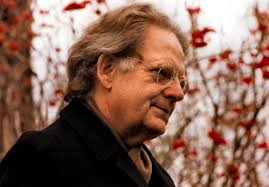
The following is adapted from the preface to my book, Northrop Frye in Conversation:
I first met Northrop Frye in 1984 when I interviewed him for a programme called "History and the New Age" which I was then preparing for Ideas. My CBC colleague Peter Gzowski once described Frye as an interviewer's nightmare: a man who actually answered the questions he was asked rather than the ones he would have liked to have been asked. His answers were usually pithy, sometimes cryptic, occasionally gruff, and they often ended in conversation-stopping aphorisms. On this first occasion I chattered nervously while I set up my tape recorder. Frye's seraphic smile and patient, unyielding demeanour did little to put me at ease. I then stammered my way through an hour-long interview in which Frye gave brief pointed answers to my long and sometimes pointless questions.
I returned twice in the succeeding years — Frye was always gracious about receiving interviewers, despite his evident lack of relish for the procedure — once to talk about Canadian culture and once to take about the English poet William Blake. In both cases the rhythm of the conversation remained fairly jerky. This made me reluctant to undertake the worthy, and even overdue project my Ideas colleagues kept urging on me: a series devoted to the ideas of Frye himself. However, in 1989, through the good offices of Frye's secretary Jane Widdicombe and Sara Wolch, my Ideas colleague and a friend of Frye's, it was all finally arranged. For a week in December, Frye and I spent each morning in recorded conversation. Sara and I and our recording engineer, Brian Hill, turned up at Frye's Massey College office every morning at nine and, by midweek, had begun to feel quite at home there. Sara's presence helped to create a relaxed atmosphere, and the fact that I had spend the previous months steeping myself in Frye's work helped me to dig beneath the surface of the epigrammatic answers Frye sometimes gave to questions he had been asked once too often. Whatever the reason the interview possessed a fullness and flow that I had not previously experienced with Frye, and we ended our conversation on Friday in peaceful silence, gazing out through gently falling snow into the quiet courtyard of the college. Just over a year later Northrop Frye died.
I supplemented my interviews with Frye with conversations with friends, colleagues, and interpreters, and the resulting three-part Ideas series was broadcast early in 1990. Two years later a transcript of our entire conversation, made by Frye scholar Robert Denham, was published as Northrop Frye in Conversation.

I don't think my interviews with Frye really added anything to what he had already written, as my interviews with more reticent and less fully articulate thinkers like George Grant and Ivan Illich sometimes did. Frye wrote from a clear, stable and consistent vision, and in more than twenty books he spelled out this vision with great thoroughness, as well as never-failing wit. All I can claim, I think, is to have brought the remarkable range of his criticism together in one place and offered an introduction to it. I have the impression that Frye, like many thinkers neither current, nor classic, is no longer read as much as he deserves to be. I hope someone may discover him anew here...